

Festival crew is the team that builds a temporary event site, keeps it running for the length of the festival, and takes it down again afterwards. WMG Event Support supplies that crew across the Netherlands, Belgium and Germany: stagehands, riggers, licensed forklift and telehandler operators, site crew and load in and load out hands, all briefed on your production schedule before they arrive on the field.
A festival is not one show. It is a small town that has to be built on a field, run for three or four days, and removed again inside a week. That changes what the crew has to be. They work rolling shifts across build, show and strike days, move between stages, reset a deck under time pressure, and keep working when the weather turns. We build the roster around your production schedule and send the same people back each day, so nobody has to relearn your site at seven in the morning.
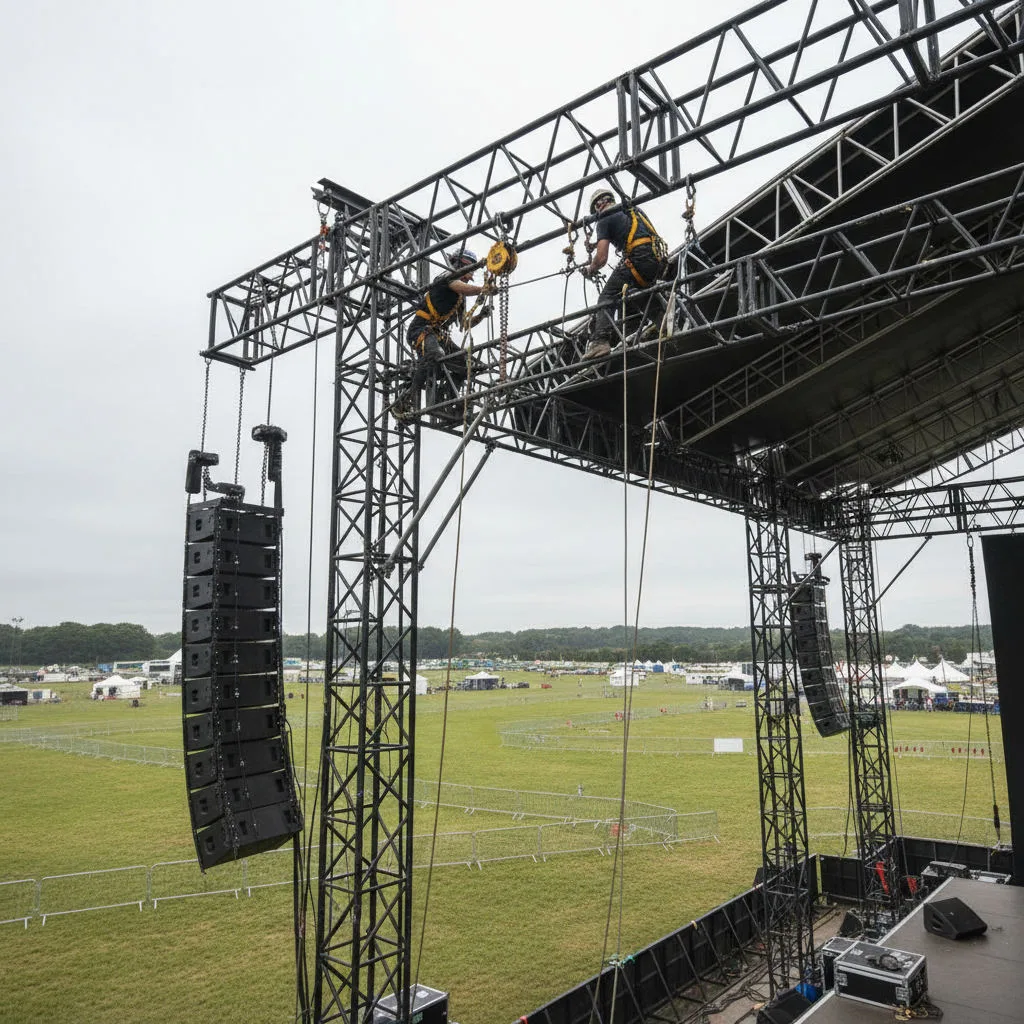
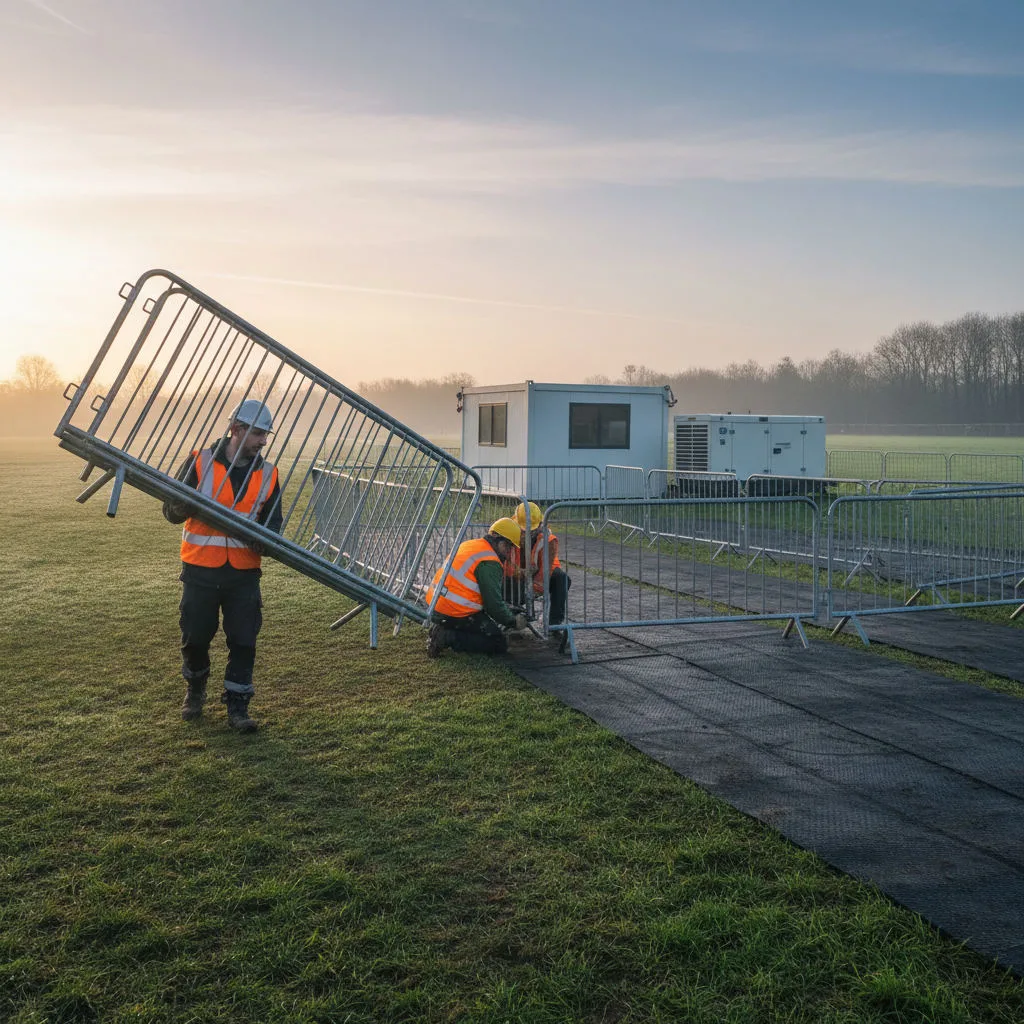
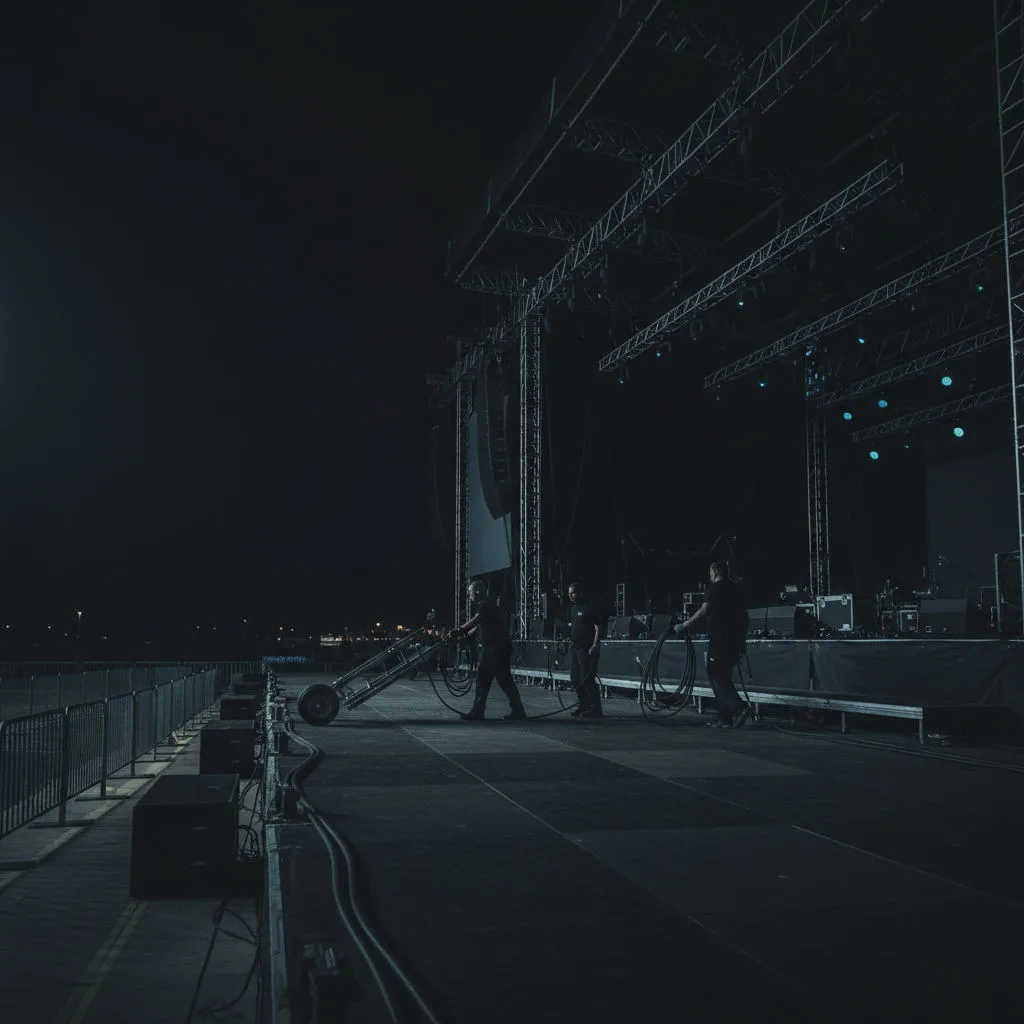
Most festivals end up with a rigging company, a staffing agency for site crew, a separate forklift supplier and a strike crew booked at the last minute. That is four contracts, four briefings and four sets of paperwork, and every gap between them is yours to close at two in the morning. WMG Event Support puts all of it under one crew chief who reports to your production manager.
It also means one roster. When the build slips a day because a truck is late or the ground is too soft, we move the same people across instead of renegotiating with three suppliers who each have another job waiting. And because WMG Event Support sits inside World Wide Mobility Group, transport, warehousing and technical installation come from the same family when a festival needs more than hands.
These come up on almost every festival brief we are sent. If yours is not answered here, tell us the site, the dates and the number of stages and we will answer it directly.
A festival crew builds the site, runs it and strikes it. That covers fencing and crowd barriers, stage and roof assembly, rigging, load in and load out at every stage, changeovers between acts, power and cable runs, backstage support and the overnight strike. On a three day festival that is normally several crews on rotating shifts, not one group working straight through.
Scale, duration and ground conditions. A single show is one load in, one performance and one load out inside a venue with a dock and a lift. A festival is a greenfield build over several days with multiple stages, soft ground, weather exposure and its own site infrastructure. If you are booking for one show in a venue, start on our concert and live event crew page instead.
For a summer festival in the Netherlands, Belgium or Germany, book the core crew three to four months ahead and confirm final numbers about four weeks out. Peak weekends in June, July and August fill early, because every festival in the region draws from the same pool of riggers and licensed operators. Late requests are still worth making, we just cannot promise the same continuity of people.
Either. Some clients book a full site crew with a crew chief, others take a changeover team for a single stage or a handful of stagehands and event technicians to top up their own team during build week. There is no minimum site size.
We agree wind and weather thresholds with your safety officer before build starts, so nobody has to make that call under pressure on the day. If a build is halted or a roof has to be lowered, the crew moves to work that can continue safely and we adjust the following day’s roster. A weather delay should extend a build, not restart it.
Yes. WMG Event Support works across Europe, with the Netherlands, Belgium and Germany as home markets. Crew, AV and technical support and transport can travel as one package, because WMG Event Support sits inside World Wide Mobility Group alongside the group’s logistics and installation companies.
Send us the site, the dates and the number of stages. We will come back with a crew plan and a roster built around your build, show and strike days.